Most likely issue
Partial-thickness tear at the supraspinatus attachment
Plain-English answer
I do not see strong image evidence of a full-thickness rotator cuff tear. A labral problem is possible, but that part is lower confidence from these exported images.
Most likely issue
Partial-thickness tear at the supraspinatus attachment
Also likely present
Nearby bursal irritation or bursitis
Not clearly shown
A full-thickness rotator cuff tear
Still uncertain
Whether there is a definite labral tear
What that means
Most likely
Think of the tendon as being frayed or split on one side where it anchors to bone, not snapped completely through.
Also visible
The space that cushions the tendon looks irritated and fluid-filled, which commonly travels with cuff problems.
Not clearly proven
I would not claim either one as certain from these exported images without a full diagnostic viewer and radiologist review.
Why I think that
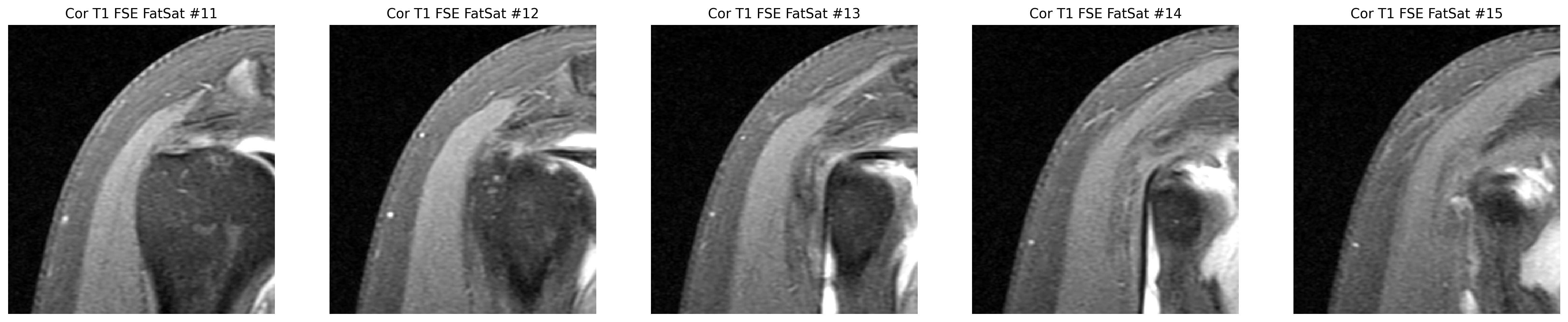
The strongest image-only read is a smaller tear or split on the joint-facing side of the supraspinatus tendon where it attaches to bone.

How the image supports the conclusion
CDI-style playback
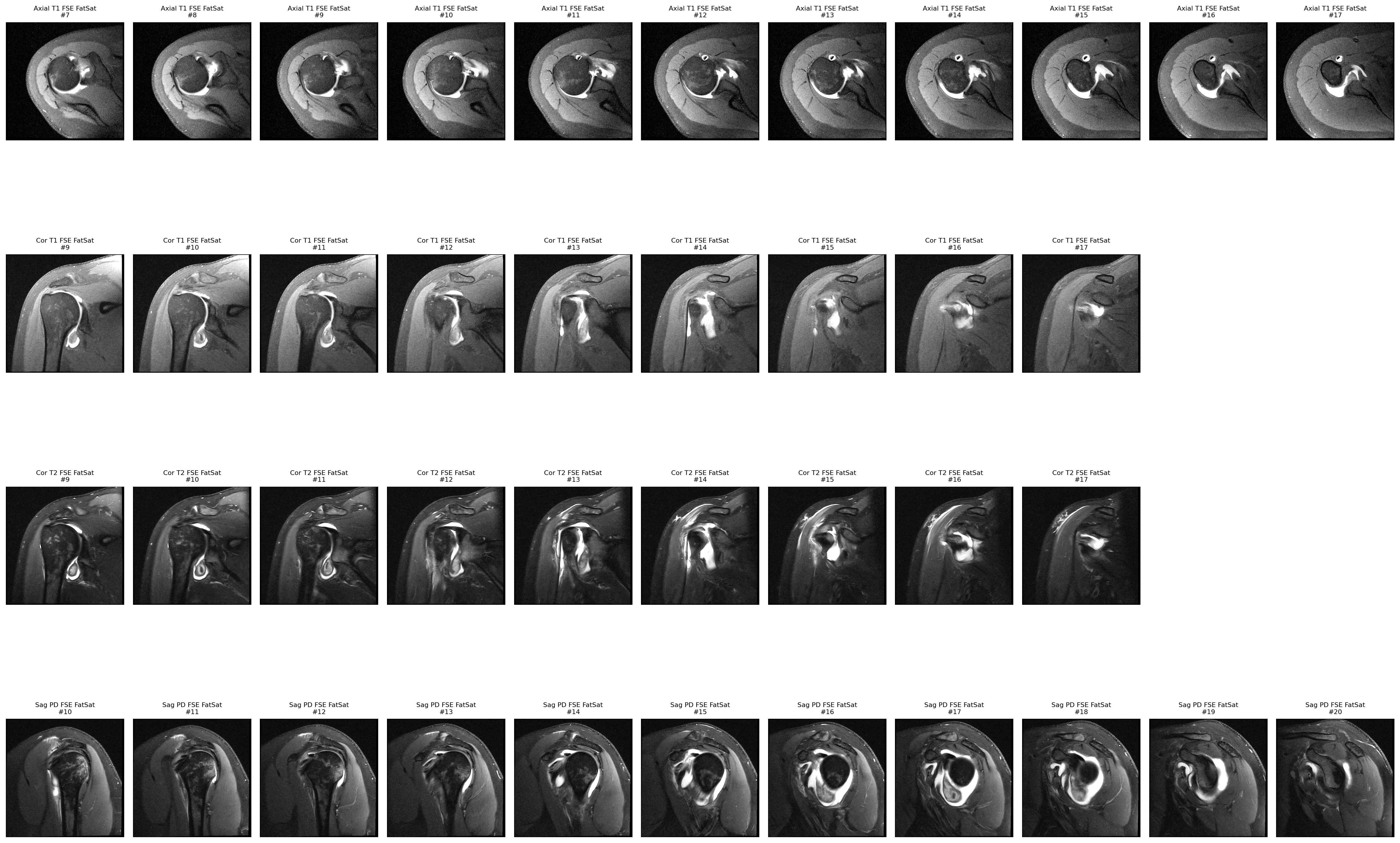
The repo has two cine-capable study sets: the MRI arthrogram sequences and the fluoroscopy or X-ray procedure frames. Pick a set first, then open any series inside it and play the slices like a radiology viewer. It is a static-site replica of stack scrolling, not a full diagnostic workstation with live windowing tools.
Series list
Waiting for set dataBrowse all images
The browser is now built around the selected image first, with a large preview, category-aware navigation, and grouped thumbnails so it is easier to understand what you are looking at.
Focused coronal look at the supraspinatus footprint.

Search and filter on the right, then step through the current result set from here.
Navigator
Search by filename or series, then browse by category.
Focus
Hand-picked close-ups of the findings that matter most.
Terms translator
An MRI done after contrast is injected into the joint to make small internal tears easier to see.
One of the main rotator cuff tendons. It helps lift the arm and often tears near its bony attachment.
A tendon injury that affects only part of the tendon. Some fibers still bridge across instead of the tendon being fully split in two.
A tear that goes all the way through the tendon from one side to the other.
A small fluid-filled cushion that reduces rubbing between tissues. When irritated, it can fill with fluid and become painful.
A ring of cartilage around the shoulder socket that helps stabilize the joint.
Method and limits
Used as evidence
Raw DICOM image series, exported PNG image panels, and the portal PDFs for procedure context.
Explicitly not used
The old README and any outside radiology report text. The PDFs did not include a separate MRI interpretation.
Main limitation
PNG exports are useful, but a radiologist still has a better diagnostic setup with live scrolling, windowing, and clinical context.
Step 1
7 MRI series and 1 fluoroscopy series were reviewed directly from the repo assets.
Step 2
The cuff finding was checked in coronal and sagittal views, while the labrum was reviewed on axial arthrogram slices.
Step 3
High-confidence claims stayed. Lower-confidence claims were kept clearly labeled as uncertain.